

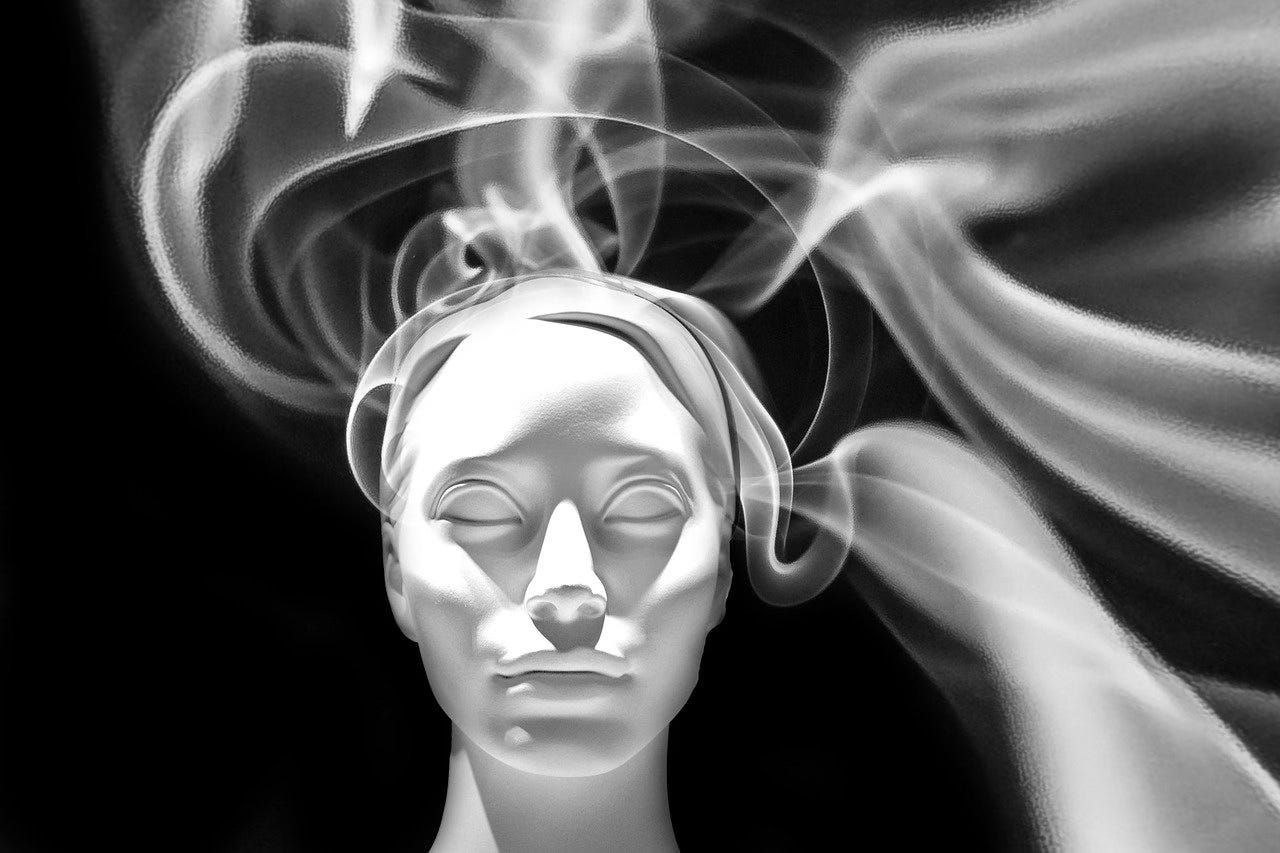
The body is often the first to know when something is wrong, and the last to be believed.
Long before the mind assembles an explanation, the body registers strain, misalignment, and truth. A tightening in the chest, a heaviness in the gut, a fatigue that doesn’t lift with rest. These signals arrive quietly, without argument, without justification. They don’t try to persuade; they simply appear.
Most of us are taught to override them.
We learn to push through exhaustion, to ignore tension, and to explain away discomfort as inconvenience rather than information. We tell ourselves we’re fine when our shoulders are permanently raised, our breath shallow, and our sleep fractured. We trust stories more than sensations because stories feel controllable. Bodies, however, don’t negotiate.
This creates a strange split. The mind insists everything is manageable while the body keeps sounding a low, persistent alarm.
The body’s intelligence isn’t abstract. It doesn’t speak in theories or plans. It speaks in appetite and aversion, energy and depletion, ease and resistance. It knows when a situation is unsafe before danger is obvious. It knows when a relationship is corrosive before words fail. It knows when a pace is unsustainable before collapse arrives.
But listening to the body requires a kind of humility that modern life discourages. It asks us to slow down, to feel, and to admit limits. It asks us to accept that willpower isn’t infinite and that ignoring signals has consequences.
So we develop elaborate ways of not listening.
We normalize chronic pain. We treat burnout as a badge of commitment. We medicate symptoms without asking what produced them. We turn discomfort into a personal failure rather than a systemic warning.
Over time, though, the body usually gets louder.
What began as a whisper becomes a flare. What could have been addressed gently demands attention through illness, injury, or emotional collapse. This isn’t punishment: it’s escalation. When subtle messages are ignored, the system switches to emergency mode.
Wisdom traditions have long recognized this. They understood that the body carries knowledge the mind can’t access directly, that emotions aren’t just mental states but physiological events, and that healing requires attention, not just intervention.
Children instinctively trust this kind of knowing. They cry when they’re tired, pull away when something feels wrong, rest without guilt. They don’t apologize for needing sleep or comfort, justify hunger, or argue with pain.
Adults, however, learn to do all of those things.
Part of growing wiser is unlearning the habit of dismissal. It’s learning to ask not just “What do I think about this?” but “What does my body register here?” It’s noticing how certain conversations drain energy while others restore it, how some commitments create tightness while others bring ease.
This isn’t mysticism. It’s attentiveness.
The body keeps a ledger. It tracks what costs us and what nourishes us. It remembers stress long after the mind declares it over. It absorbs environments, rhythms, and relationships whether or not we approve.
Ignoring that ledger doesn’t make it disappear. It just means the balance will be collected later.
Listening doesn’t mean obeying every sensation or avoiding all discomfort. Some growth, after all, requires effort, challenge, and temporary strain. But there’s a difference between purposeful effort and chronic self-violation. The body knows that difference even when the mind rationalizes it away.
One of the clearest signs of maturity is learning how to tell them apart.
This kind of listening also restores trust. When you stop overriding your own signals, your body stops needing to shout. Sensations become more nuanced, intuition sharpens, and you recover a sense of orientation that doesn’t rely solely on external validation or constant analysis.
It also fosters compassion. When you recognize how much information the body carries, you become less judgmental of your own limits and others’. You understand that irritability may be exhaustion, that withdrawal may be overwhelm, and that resistance may be self-protection rather than stubbornness.
In a culture that prizes mental agility and verbal fluency, bodily wisdom is often treated as secondary. But it’s foundational. Without it, thought floats free of reality. Decisions lose grounding. Life becomes something you manage rather than inhabit.
Relearning the body’s language doesn’t require dramatic change. It starts with pauses, with noticing your breath, with asking simple questions and waiting for answers that aren’t verbal. With respecting your body’s signals even when they’re inconvenient.
The body doesn’t lie, but it can be ignored. And when it is, it waits.
Long before the mind admits the truth, the body has already adjusted, compensated, and endured. Listening earlier doesn’t make life easier in every moment, but it makes it truer.
And over time, truth is what allows us to remain whole.
Unless I am mistaken, it was Lao Tsu who advised: All knowledge worth knowing is in the body. It certainly appears that way to me. A priori wisdom is not rocket science. It is just the knowledge before the thoughts come thru about what is going on within/without that the body apperceives. First knowing, as I put it. When my brain listens to my body, I can motivate myself to correct some denial or misconception. If not, I suffer. One cannot experience Maslow's levels of hierarchy unless the bottom platform is solid - that would be the corporeal body, the foundation of biotic matter.
As a somatic therapist and energy worker, this really resonates with me. One of the techniques I use takes this to a whole new level by allowing me to communicate with the subconscious mind using muscle testing/kinesiology as it guides us to the exact imbalances in the body that are causing whatever emotional or physical issue is being addressed. So, the body really does know everything about us and our subconscious mind is our very own inner healer. I'm very excited about this technique, as well as how somatic therapy and other energy techniques like EFT are finally hitting the mainstream. Hoping to get the Emotion & Body Code on people's radars so I'm posting about it here. If anyone wants to know more I'd be happy to chat.